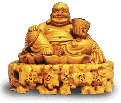
Hotei, a cheerful and contented Buddhist monk, is a wonderful icon; just his appearance can cheer anyone up from a bad day. His large pot-belly protrudes as he laughs through time. Hotei, better known as the "Laughing Buddha," can be found all over the world.
Hotei originates from a mix of Buddhist and Shinto religions, tracing back to the Liang Dynasty in China. A Buddhist monk named Pu-Tai, known for his benevolent nature, inspired Hotei. His large belly led to his caricature as the "Laughing Buddha."

Hotei is also considered one of the Shichi Fukujin, the seven Japanese Shinto-gods of luck. Buddhist monks used Hotei to communicate Buddhist principles to Japanese Shinto followers, successfully merging the two beliefs.
Hotei is not limited to Japan; he is common in Chinese temples, often located at entrances or in courtyards. He is sometimes worshiped as a god of good luck and prosperity.


The image of Hotei usually includes a cloth sack, filled with precious items, food, or the woes of the world. Sometimes children are seen as the precious items of the world in these depictions. Hotei's large belly symbolizes happiness, luck, and generosity.
The name Hotei means "cloth bag" or "glutton." Legend says rubbing his belly brings wealth, good luck, and prosperity. He often carries a begging bowl, showing his Buddhist nature. Hotei is a wandering monk who takes away people's sadness, embodying love and cheerfulness.